
Lab Furniture
Frequently Asked Questions
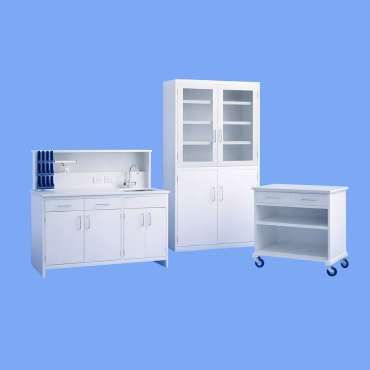
GMP lab furniture has non-porous, smooth, chemical-resistant surfaces with no crevices or dead zones. Frames use SS316L or epoxy-coated steel; worktops use epoxy resin, phenolic resin, or granite. It must include material test certificates (MTCs) and support IQ/OQ qualification documentation in regulated pharmaceutical environments.
Frames: SS316L (sterile/wet zones) or epoxy-coated steel (general dry labs). Worktops: epoxy resin (highest chemical resistance, pharmaceutical QC standard), phenolic resin (moisture-resistant, general lab), or granite (vibration-dampening, precision weighing). Stainless steel is preferred for drawers and shelving where frequent disinfection is required.
SS304 suits general dry lab areas with good corrosion resistance. SS316L (low-carbon, 2–3% molybdenum) provides superior chloride resistance, preventing pitting corrosion at weld joints. SS316L is required for cleanroom environments, sterile zones, and areas where chloride-containing cleaning agents are used per EU GMP and FDA 21 CFR Part 211.
Product-contact surfaces: Ra ≤0.8 µm minimum (No. 4 or 2B finish). Non-product-contact classified area surfaces: Ra ≤1.6 µm. Electropolishing achieves Ra 0.1–0.2 µm, improving cleanability and corrosion resistance. Worktops must be seamless or flush-sealed to eliminate crevices that could harbour microbial contamination during pharmaceutical operations.
Required documents include URS, DQ confirming design meets URS, material test certificates (MTCs), surface roughness reports, weld inspection records, cleaning validation support data, and IQ confirming correct installation. All documentation is retained in the facility qualification master plan and made available during FDA and EU GMP regulatory inspections.
Epoxy resin worktops are seamless, non-porous, resistant to strong acids, alkalis, solvents, and pharmaceutical disinfectants — the GMP QC lab standard. Phenolic resin worktops are wood-fibre composite with good moisture and chemical resistance at lower cost — suitable for general lab use but less chemically inert than epoxy resin.
Yes. Cleanroom adaptations include round-section legs (no particle-trapping ledges), crevice-free continuous-weld construction, flush-mounted sinks and fittings, perforated shelves for airflow, wall-mounted designs for floor cleaning access, and height-adjustable frames for ergonomic gowned working. All materials must be compatible with VHP, sporicides, and IPA disinfection regimes.
Clean with soft non-shedding cloths and approved agents (70% IPA, quaternary ammonium disinfectants) in the direction of the surface grain. Avoid abrasive pads, steel wool, or bleach — these damage the passive oxide layer. Wipe dry after disinfection. Inspect periodically for surface degradation per documented cleaning SOP acceptance criteria.
Talk to Our Engineering Experts
Share your requirements and our team will get back with tailored solutions.
Talk to Our Engineering Experts
Share your requirements and our team will get back with tailored solutions.