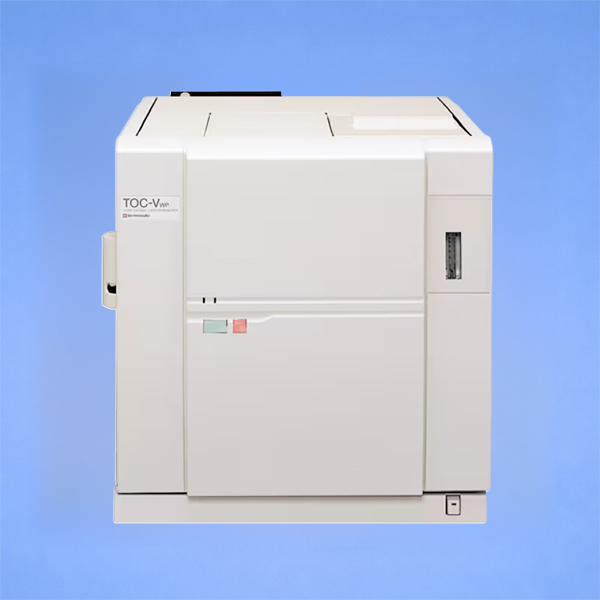
TOC Analyzer
TOC analyzers are vital instruments for monitoring organic contamination levels in pharmaceutical water systems, serving as a key indicator of purity and process integrity. Pharmaco Global offers TOC analyzers for pharmaceutical water systems designed for high sensitivity, real-time monitoring, and reliable performance in regulated environments.
These systems are used in purified water (PW), water for injection (WFI), and cleaning validation processes to ensure compliance with global regulatory standards. Their automated operation and accurate detection capabilities support consistent water quality, efficient monitoring, and GMP-compliant system performance.
Frequently Asked Questions
A TOC (Total Organic Carbon) analyser measures organic carbon dissolved in water by oxidising organic molecules to CO₂ and quantifying it via NDIR or conductivity detection. In pharmaceutical manufacturing, it monitors purity of purified water (PW) and WFI per USP and EP 2.2.44 pharmacopoeial specifications.
TOC sensitively detects organic contamination from leachables, biofilm metabolites, cleaning agent residuals, and source water organics. Elevated TOC signals system deterioration before other quality parameters fail. USP mandates TOC as a release specification for both purified water and WFI in pharmaceutical manufacturing operations.
USP requires: TOC ≤500 ppb for both PW and WFI; mandatory System Suitability Testing (SST) using sucrose and 1,4-benzoquinone reference solutions before each test run; SST response ratio (rw) must be 0.85–1.15, confirming sufficient instrument oxidation efficiency to reliably detect organic contamination at compendial limits.
The TOC limit is ≤500 ppb (0.5 mg C/L) for both Purified Water and WFI per USP , EP 2.2.44, and JP. Sites set internal alert limits (≤200–300 ppb) and action limits below the compendial specification to detect water system deterioration early and trigger corrective action before breaching the pharmacopoeial limit.
Organic molecules are oxidised to CO₂ by UV/persulfate oxidation (pharmaceutical water) or high-temperature combustion (higher TOC matrices). CO₂ is measured by NDIR detector or conductivity cell. TOC is calculated by subtracting inorganic carbon, or by the NPOC method — purging inorganic carbon before oxidation and detection.
SST per USP uses two reference solutions: sucrose (easy to oxidise, 500 ppb C) and 1,4-benzoquinone (difficult to oxidise, 500 ppb C). The SST response ratio (rw) must be 0.85–1.15 — confirming the analyser has sufficient oxidation efficiency to reliably detect organic contamination at pharmacopoeial detection limits.
Online TOC analysers connect directly to the water loop, providing continuous real-time monitoring with automated alerts and complete electronic audit trails — the standard for critical PW and WFI systems. Offline analysers test manually collected grab samples — used for validation, satellite monitoring points, and facilities without continuous online monitoring.
USP does not prescribe frequency — it is defined by the validated water control strategy and risk assessment. Online systems provide continuous data. For offline testing, daily sampling at point-of-use is typical for PW systems. WFI systems generally require continuous online TOC monitoring per FDA and EMA regulatory expectations.
Talk to Our Engineering Experts
Share your requirements and our team will get back with tailored solutions.
Talk to Our Engineering Experts
Share your requirements and our team will get back with tailored solutions.