



Skip to content Skip to footer

Your Facility,
Certified for the World

Pharmaco Global’s in-house Regulatory Services team guides pharmaceutical manufacturers through the complete EU GMP certification journey — from gap analysis to approved certificate — so you can export to regulated markets with confidence.

Regulatory Frameworks We Cover

Image gallery marquee

Our 7-Step Certification Process

Gap Analysis

Gap Analysis

Our in-house regulatory team assesses your current facility against target regulatory standards, identifying deficiencies in infrastructure, documentation, and quality systems. You receive a clear, prioritised remediation plan so you know exactly what needs to be fixed and in what order.
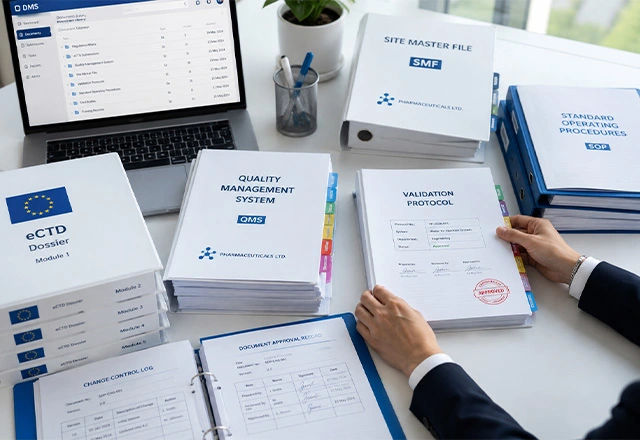
Documentation & Dossier Preparation

Documentation & Dossier Preparation

We prepare your complete regulatory submission package: eCTD dossier (Electronic Common Technical Document), Site Master File (SMF), Quality Management System (QMS) documentation, Standard Operating Procedures (SOPs), and validation protocols and reports.
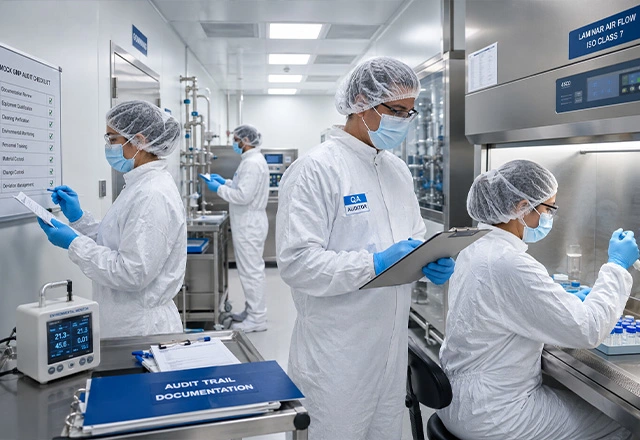
Pre-Inspection Preparation

Pre-Inspection Preparation

Before any inspector visits, we conduct rigorous internal readiness checks: mock GMP audits simulating actual inspector behaviour, CAPA (Corrective and Preventive Action) preparation, staff briefing and audit-response training, and full facility walkthrough and documentation alignment.
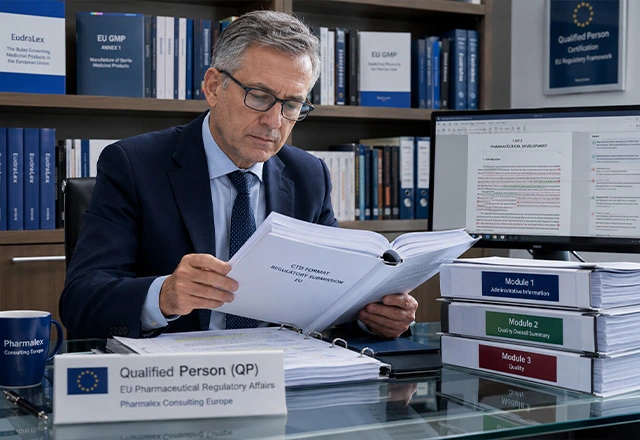
Submission to Qualified Person (QP)

Submission to Qualified Person (QP)

Completed documentation is submitted to our established network of Qualified Personnel (QPs) in Europe. The QP evaluates the dossier on behalf of your facility and prepares it for inspector review. Our established QP relationships mean faster turnaround and fewer back-and-forth cycles.
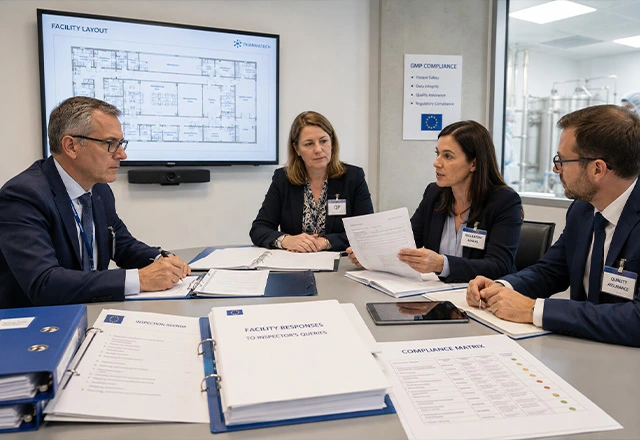
EU Inspector Review

EU Inspector Review

The QP presents documentation to the appointed EU regulatory inspector. All inspector queries are managed through our team, ensuring timely, accurate, and professionally drafted responses that protect your submission.
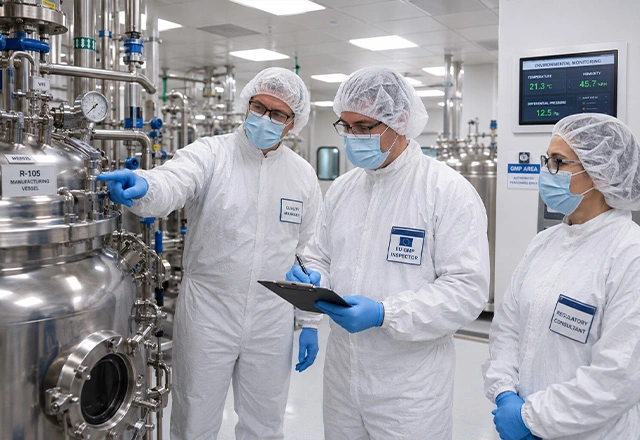
Physical Facility Inspection

Physical Facility Inspection

If documentation is approved, the inspector visits your facility for a physical GMP inspection. Our regulatory team accompanies throughout, managing observations in real time and ensuring your team is confident and well-prepared.
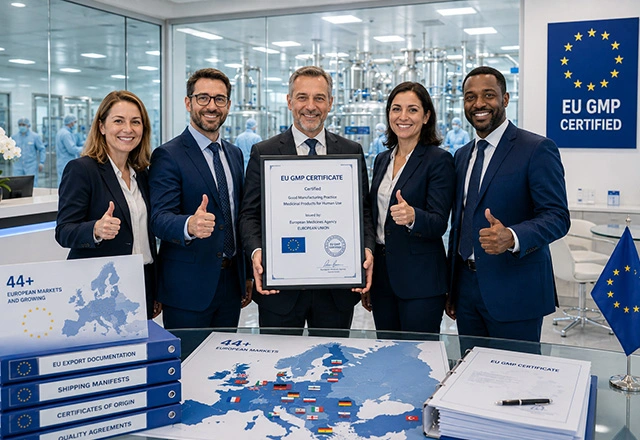
Certification & Market Access

Certification & Market Access

Minor observations are corrected and responded to with CAPA documentation. Upon approval, your facility receives EU GMP certification, unlocking export to 44+ regulated markets across Europe and beyond.

1. Gap Analysis

Our in-house regulatory team assesses your current facility against target regulatory standards — identifying deficiencies in infrastructure, documentation, and quality systems. You receive a clear, prioritised remediation plan so you know exactly what needs to be fixed and in what order.

2. Documentation & Dossier Preparation

We prepare your complete regulatory submission package: eCTD dossier (Electronic Common Technical Document), Site Master File (SMF), Quality Management System (QMS) documentation, Standard Operating Procedures (SOPs), and validation protocols and reports.

3. Pre-Inspection Preparation

Before any inspector visits, we conduct rigorous internal readiness checks: mock GMP audits simulating actual inspector behaviour, CAPA (Corrective and Preventive Action) preparation, staff briefing and audit-response training, and full facility walkthrough and documentation alignment.

4. Submission to Qualified Person (QP)

Completed documentation is submitted to our established network of Qualified Personnel (QPs) in Europe. The QP evaluates the dossier on behalf of your facility and prepares it for inspector review. Our established QP relationships mean faster turnaround and fewer back-and-forth cycles.

5. EU Inspector Review

The QP presents documentation to the appointed EU regulatory inspector. All inspector queries are managed through our team, ensuring timely, accurate, and professionally drafted responses that protect your submission.

6. Physical Facility Inspection

If documentation is approved, the inspector visits your facility for a physical GMP inspection. Our regulatory team accompanies throughout, managing observations in real time and ensuring your team is confident and well-prepared.

7. Certification & Market Access

Minor observations are corrected and responded to with CAPA documentation. Upon approval, your facility receives EU GMP certification — unlocking export to 44+ regulated markets across Europe and beyond.

Markets You Can Access After Certification

A single EU GMP certificate does not just open one door. It positions your facility as a world-class GMP manufacturer — capable of supplying to global tenders, multinational partners, and regulated distributors worldwide.

EU GMP certification enables your facility to supply to regulated markets including:

Ready to Build Your Facility the Right Way?

Whether you are starting with an empty plot or upgrading an existing facility, Pharmaco Global brings the engineering expertise, regulatory intelligence, and project accountability to deliver the facility your product and your markets demand.

Request a Consultation

FAQ's

What is EU GMP certification and why do pharmaceutical manufacturers need it?

 EU GMP certification confirms that a pharmaceutical manufacturer’s facility, processes, and quality systems comply with EudraLex Volume 4 — the European Union’s Good Manufacturing Practice guidelines. It is issued by a National Competent Authority following a physical facility inspection and is mandatory for exporting finished pharmaceuticals or APIs to any of the 27 EU member states.

What are the steps to obtain EU GMP certification for a pharmaceutical facility?

EU GMP certification follows seven stages: regulatory gap analysis, documentation and dossier preparation — including Site Master File, QMS, and SOPs — mock GMP audit, submission to a Qualified Person (QP) in Europe, EU inspector review, physical facility inspection, and CAPA response leading to certificate issuance. The process typically takes 12–24 months from initial gap analysis.

How long does it take to get EU GMP certification for a pharmaceutical manufacturer?

EU GMP certification typically takes 12–24 months from initial gap analysis to certificate issuance, depending on facility readiness, documentation maturity, and inspector scheduling. Facilities with major infrastructure gaps take longer. EU GMP certificates are valid for three years from the date of inspection, after which a new inspection and re-certification are required.

What is the difference between WHO GMP and EU GMP certification for pharmaceutical export?

WHO GMP certification enables export to developing markets and UN procurement channels. EU GMP certification — granted after a physical inspection by a European National Competent Authority — is required for supplying all 27 EU member states and is recognised by 44+ additional regulated markets including the UK, GCC, Australia, and Canada. EU GMP is the stricter and more commercially valuable standard.

Which global markets can a pharmaceutical manufacturer access with EU GMP certification?

EU GMP certification unlocks export to all 27 EU member states, the UK via MHRA recognition, WHO prequalification markets across Africa, Asia, and Latin America, GCC and regulated MENA markets, and countries with EU GMP mutual recognition agreements including Australia, Canada, Japan, and Switzerland — making it the single most commercially valuable GMP certificate a manufacturer can obtain.

What is a GMP gap analysis and why is it the first step in pharmaceutical certification?

A GMP gap analysis compares a pharmaceutical manufacturer’s existing facility, documentation, and quality systems against the target regulatory standard — EU GMP, WHO GMP, or USFDA. It identifies specific deficiencies in infrastructure, SOPs, validation records, and quality systems, and produces a prioritised remediation plan so manufacturers know exactly what must be corrected before inspection.

What is the role of a Qualified Person (QP) in the EU GMP certification process?

A Qualified Person (QP) is a legally designated individual required under EU pharmaceutical legislation who reviews and certifies each batch of medicinal product before release to the EU market. In the certification process, the QP evaluates the manufacturer’s regulatory dossier, liaises with the appointed EU inspector, and confirms the facility meets EU GMP standards on behalf of the marketing authorisation holder.

What documentation is required to apply for EU GMP certification?

 EU GMP certification requires a Site Master File (SMF) describing the facility, manufacturing activities, and quality systems; an eCTD-format regulatory dossier; Standard Operating Procedures (SOPs); validation protocols and reports covering equipment, utilities, cleaning, and processes; CAPA records; and batch manufacturing records — all prepared to EudraLex Volume 4 format before submission to the Qualified Person and EU inspector.

Chat Icon