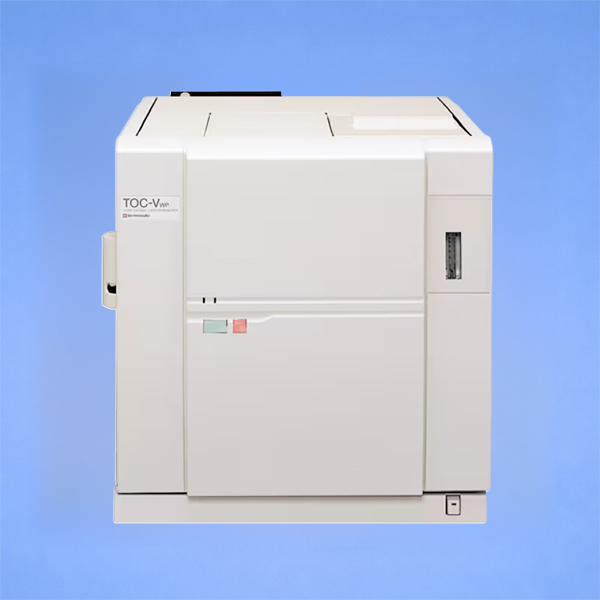



TOC Analyzer
A TOC analyzer for pharmaceutical water systems is an analytical instrument used to determine the concentration of organic carbon in water or liquid samples. It converts organic compounds into carbon dioxide, which is then measured to provide a total organic carbon value, indicating the overall organic load in the sample.
TOC analysis is widely used in pharmaceutical water systems, drinking water monitoring, environmental testing, and semiconductor manufacturing, where maintaining organic purity is critical. It supports consistent water quality, process control, and compliance with regulatory requirements in GMP-regulated environments.
Key Features
- Accurate measurement of total organic carbon
- High sensitivity for low-level contamination detection
- Suitable for PW, WFI, and process water systems
- Supports real-time monitoring and control
- Designed for regulatory compliance and validation
Frequently Asked Questions
A TOC (Total Organic Carbon) analyzer measures the concentration of organic carbon in pharmaceutical water systems—Purified Water (PW) and Water for Injection (WFI). It detects trace organic contaminants from source water, system materials, and biofilm, ensuring water quality meets USP <643>, EP 2.2.44, and GMP regulatory requirements.
USP <643> specifies a TOC limit of 500 ppb (0.5 mg/L) of carbon for Purified Water and 500 ppb for Water for Injection. The TOC analyzer must have a manufacturer-specified detection limit of 0.05 mg/L (50 ppb) or lower to reliably demonstrate compliance with these pharmacopoeial water quality specifications.
Online TOC analyzers continuously monitor pharmaceutical water systems in real time, providing immediate alerts if TOC levels exceed action limits—ideal for WFI loops and purified water distribution systems. Offline (laboratory) TOC analyzers test discrete grab samples, offering flexibility for QC testing, cleaning validation, and periodic pharmacopoeial compliance verification.
Pharmaceutical TOC analyzers use UV/persulfate oxidation, high-temperature combustion, or UV/persulfate combined methods to fully oxidise organic molecules to CO₂. The generated CO₂ is then detected by a non-dispersive infrared (NDIR) detector or conductivity measurement. The chosen method must meet USP <643> system suitability requirements for sucrose and 1,4-benzoquinone standards.
Yes. GMP guidelines—FDA 21 CFR Part 211, EU GMP Chapter 3, and ICH Q7—require continuous or routine monitoring of pharmaceutical water quality. TOC testing per USP <643> and EP 2.2.44 is the compendial method for organic impurity control in Purified Water and WFI used in drug manufacturing, cleaning, and sterile product formulation.
TOC analyzers quantify residual organic contaminants in equipment rinse water after cleaning, confirming that cleaning procedures remove drug product residues below validated acceptance limits. This non-specific measurement detects all carbon-containing residues in a single test, making TOC the preferred analytical method for cleaning validation under FDA and EU GMP guidelines.
USP <643> requires system suitability demonstration using two standards: sucrose (easily oxidisable carbon, ≥85% recovery confirms oxidation efficiency) and 1,4-benzoquinone (resistant carbon, ≥85% recovery confirms instrument sensitivity). These tests verify the TOC analyzer's ability to accurately quantify both easily and difficultly oxidisable organic compounds in pharmaceutical water samples.
Yes. Pharmaceutical TOC analyzers are fully qualifiable under IQ/OQ/PQ protocols, with method validation per ICH Q2(R1) covering linearity, LOD, LOQ, accuracy, and precision. Software must comply with 21 CFR Part 11 for electronic records, audit trails, and user access controls, ensuring data integrity and readiness for FDA and EMA GMP inspections.
Are your products compliant with global pharmaceutical standards?
Yes, all our products are designed and sourced to meet international regulatory standards, including GMP, USFDA, EU-GMP, WHO, and other relevant compliance requirements.
Can your products be integrated into existing pharmaceutical facilities?
Absolutely. Our solutions are engineered for seamless integration with existing systems, ensuring minimal disruption and optimal performance within your current setup.
Do you provide support in selecting the right product for our application?
Yes, our team offers technical consultation to help you choose the most suitable product based on your process requirements, facility design, and compliance needs.
Are your products suitable for turnkey pharmaceutical projects?
Yes, all our products are aligned with our turnkey execution approach, ensuring compatibility with overall facility design, engineering, and operational requirements.
Do you offer customisation based on specific project requirements?
Yes, we provide customised solutions tailored to your process, capacity, and regulatory requirements to ensure optimal performance and efficiency.
What industries and applications do your products support?
Our products are used across pharmaceutical manufacturing, biotechnology, nutraceuticals, research laboratories, and regulated healthcare environments.
How do you ensure product quality and reliability?
We follow strict quality standards and work with trusted technologies and manufacturing processes to ensure consistent performance, durability, and compliance.
Do you provide after-sales or technical support?
Yes, we offer ongoing technical support to ensure smooth operation, performance optimisation, and long-term reliability of all supplied systems and components.