
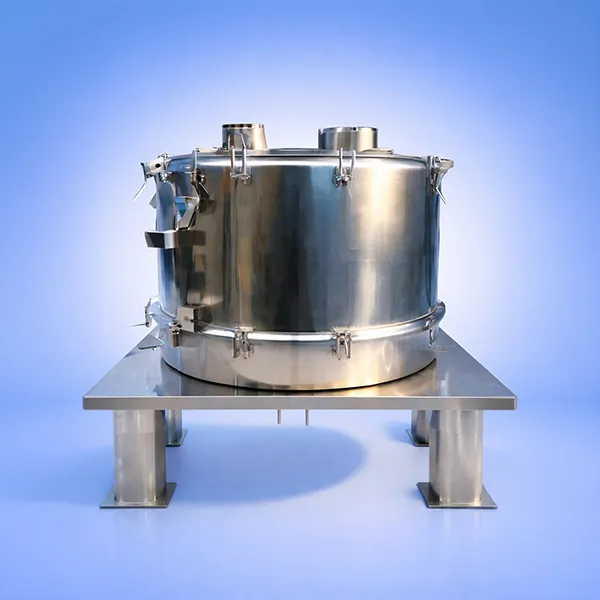
Centrifuge
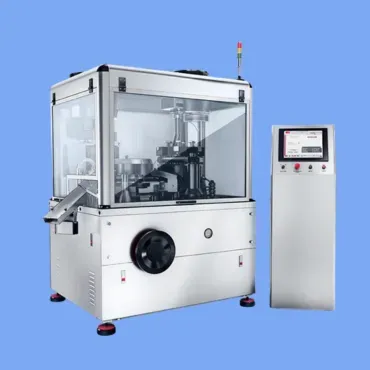
A centrifuge for pharmaceutical processing is a high-performance separation system designed for efficient solid–liquid separation in pharmaceutical, chemical, and biotechnology applications. It uses high rotational speeds to generate centrifugal force, enabling fast and effective separation while improving product purity and process efficiency.
Pharmaco Global centrifuge systems are engineered with robust stainless-steel construction, advanced drive systems, and optimized basket designs to ensure reliable and consistent performance. They are suitable for applications such as filtration, dewatering, crystal separation, and product recovery in GMP-compliant manufacturing environments.
Key Features
- High-speed solid–liquid separation
- Stainless-steel construction for durability
- Advanced drive and control systems
- Efficient filtration and dewatering capability
- Suitable for pharma and process industries
Frequently Asked Questions
A pharmaceutical centrifuge uses high rotational speed to generate centrifugal force, separating mixtures by density differences. In pharmaceutical manufacturing, centrifuges isolate APIs, separate cell biomass from fermentation broths, clarify liquids, recover crystallised drug substances, and process suspensions—making them essential across API synthesis, biologics manufacturing, and quality control operations.
Pharmaceutical manufacturing uses several centrifuge types: basket centrifuges (batch solid-liquid separation for API isolation), peeler centrifuges (automated cake discharge for continuous API recovery), decanter centrifuges (continuous three-phase or solid-liquid separation), and laboratory centrifuges (microcentrifuges, benchtop, and high-speed models for QC and analytical sample preparation).
A peeler centrifuge is a horizontal, automated pharmaceutical centrifuge that isolates, washes, and discharges crystallised API cake in a fully enclosed, GMP-compliant environment. Its automated peeling knife removes the product cake without opening the centrifuge, minimising operator exposure, preventing contamination, and enabling safe handling of potent or hazardous active pharmaceutical ingredients.
Yes. GMP pharmaceutical centrifuges are built from 316L stainless steel with electropolished, crevice-free surfaces, CIP/SIP capability, and full IQ/OQ/PQ qualification support. Enclosed designs meet containment requirements for potent compound handling, and ATEX-rated models are available for solvent-wet applications, complying with FDA, EU GMP, and OSHA occupational exposure guidelines.
A decanter centrifuge continuously separates solids from liquids in pharmaceutical and bioprocessing applications, handling high solid-content feeds unsuitable for other centrifuge types. It is used for cell harvesting in fermentation, clarification of cell culture broths, sludge dewatering, and continuous API suspension processing—offering high throughput with minimal manual intervention.
Centrifugation is a primary clarification step in biopharmaceutical downstream processing, separating cells, cell debris, and particulates from the product-containing supernatant after fermentation or cell culture. This clarified harvest is then processed through subsequent filtration and chromatography steps to purify monoclonal antibodies, recombinant proteins, vaccines, and other biologic drug substances.
Pharmaceutical centrifuges operate across a wide speed range: laboratory microcentrifuges reach 15,000–21,000 RPM (up to 30,000 × g), production basket centrifuges operate at 600–1,800 RPM (300–1,800 × g), and high-speed preparative centrifuges achieve 20,000+ RPM. The required g-force depends on the particle or cell size and density of the material being separated.
Yes. Pharmaceutical centrifuges are fully qualifiable under IQ/OQ/PQ protocols. IQ verifies installation, utilities, and materials of construction; OQ confirms speed, temperature control, and CIP/SIP performance; PQ demonstrates consistent separation performance over multiple production batches. Full validation documentation packages support FDA, EMA, and global regulatory agency GMP compliance inspections.
Yes, all our products are designed and sourced to meet international regulatory standards, including GMP, USFDA, EU-GMP, WHO, and other relevant compliance requirements.
Absolutely. Our solutions are engineered for seamless integration with existing systems, ensuring minimal disruption and optimal performance within your current setup.
Yes, our team offers technical consultation to help you choose the most suitable product based on your process requirements, facility design, and compliance needs.
Yes, all our products are aligned with our turnkey execution approach, ensuring compatibility with overall facility design, engineering, and operational requirements.
Yes, we provide customised solutions tailored to your process, capacity, and regulatory requirements to ensure optimal performance and efficiency.
Our products are used across pharmaceutical manufacturing, biotechnology, nutraceuticals, research laboratories, and regulated healthcare environments.
We follow strict quality standards and work with trusted technologies and manufacturing processes to ensure consistent performance, durability, and compliance.
Yes, we offer ongoing technical support to ensure smooth operation, performance optimisation, and long-term reliability of all supplied systems and components.