
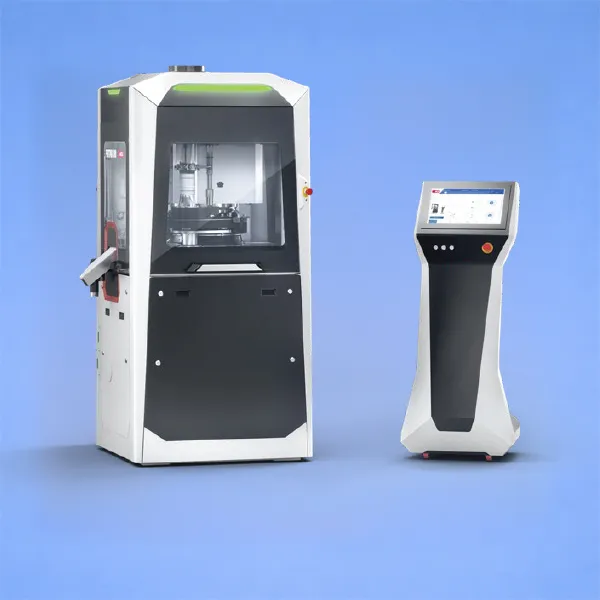
Tablet Compression
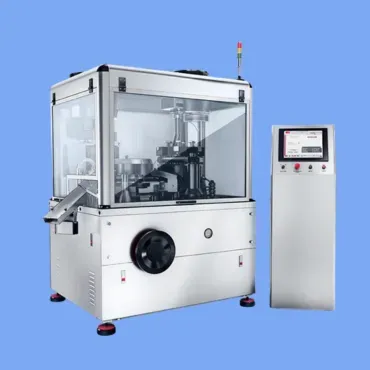
Tablet compression equipment for pharmaceutical manufacturing is designed to convert powders or granules into tablets with uniform size, shape, weight, and hardness. It is a critical process in solid dosage production, ensuring batch consistency and reliable product performance.
Pharmaco’s tablet compression range supports applications from research and development to large-scale commercial manufacturing. With single and double-rotary press configurations, these systems are built for consistent output, process reliability, and ease of operation in GMP-compliant environments.
Key Features
- Uniform tablet size, weight, and hardness
- Single and double-rotary press configurations
- Suitable for R&D and commercial production
- Consistent and reliable compression performance
- Designed for GMP-compliant manufacturing
Related products
Frequently Asked Questions
A tablet compression machine (rotary tablet press) uses multiple tooling stations rotating on a turret to compress granulated or directly compressible powder blends between upper and lower punches within a die, forming tablets of precise weight, hardness, thickness, and diameter. Modern rotary presses produce 250,000 to over 1,000,000 tablets per hour.
A single-punch tablet press uses one set of punches and a die to compress tablets in a reciprocating motion—suitable for R&D and small batches (up to ~3,600 tablets/hour). A rotary tablet press uses multiple tooling stations (16–75+ stations) rotating continuously, dramatically increasing throughput for commercial-scale pharmaceutical solid dosage form production.
Pharmaceutical tablet compression uses two internationally recognised tooling standards: TSM (Tablet Specification Manual), used primarily in North America, and the EU Standard, widely adopted globally. Both define punch and die dimensions for B, D, and BB tooling types. Standardised tooling ensures interchangeability between different press models from different manufacturers.
A tablet compression machine controls tablet weight (via fill cam adjustment), hardness (via compression force), thickness, friability, and disintegration. Modern presses with automatic weight control (AWC) systems monitor every tablet's compression force in real time, making continuous micro-adjustments to maintain fill weight within ±1–2% of target throughout the production run.
Yes. GMP tablet presses feature 316L stainless steel contact parts, enclosed dust extraction, containment options for potent APIs (OEB 4/5), 21 CFR Part 11-compliant electronic batch records, and full IQ/OQ/PQ qualification documentation. They comply with FDA 21 CFR Part 211, EU GMP, and ATEX requirements for controlled pharmaceutical solid dosage manufacturing environments.
Pharmaceutical rotary tablet presses operate at pre-compression forces of 1–10 kN and main compression forces of 5–100 kN, depending on the tablet formulation and required hardness. Force-controlled compression ensures consistent tablet hardness and dissolution performance, with compression force data recorded in electronic batch records for GMP process documentation.
Yes. Specialised rotary tablet presses support bilayer and trilayer tablet compression, enabling fixed-dose combination products or differentiated release profiles (immediate + extended) in a single tablet. Bi-layer presses use separate feeder systems for each layer with intermediate pre-compression between layers to prevent cross-contamination and ensure layer weight consistency.
GMP tablet compression machines require IQ/OQ/PQ qualification at installation and after significant modification. Routine preventive maintenance—including punch and die inspection, tooling replacement, and mechanical calibration—follows manufacturer-recommended schedules and is documented in the equipment maintenance log. Annual re-qualification verifies that the press continues to meet defined performance specifications.
Yes, all our products are designed and sourced to meet international regulatory standards, including GMP, USFDA, EU-GMP, WHO, and other relevant compliance requirements.
Absolutely. Our solutions are engineered for seamless integration with existing systems, ensuring minimal disruption and optimal performance within your current setup.
Yes, our team offers technical consultation to help you choose the most suitable product based on your process requirements, facility design, and compliance needs.
Yes, all our products are aligned with our turnkey execution approach, ensuring compatibility with overall facility design, engineering, and operational requirements.
Yes, we provide customised solutions tailored to your process, capacity, and regulatory requirements to ensure optimal performance and efficiency.
Our products are used across pharmaceutical manufacturing, biotechnology, nutraceuticals, research laboratories, and regulated healthcare environments.
We follow strict quality standards and work with trusted technologies and manufacturing processes to ensure consistent performance, durability, and compliance.
Yes, we offer ongoing technical support to ensure smooth operation, performance optimisation, and long-term reliability of all supplied systems and components.