
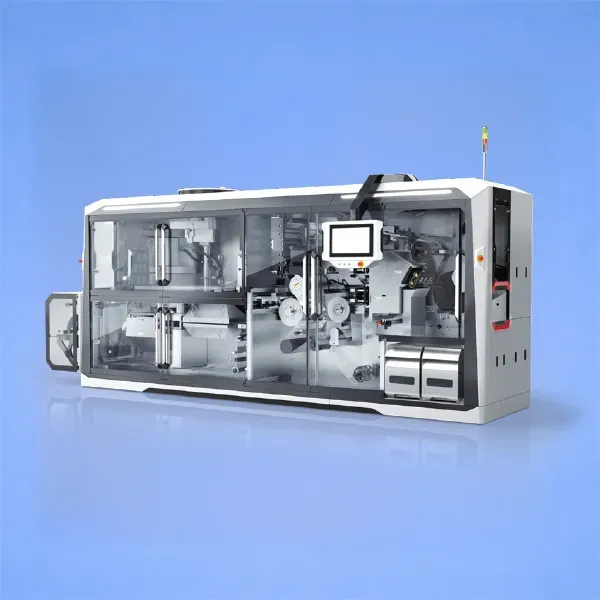
Packaging Machines
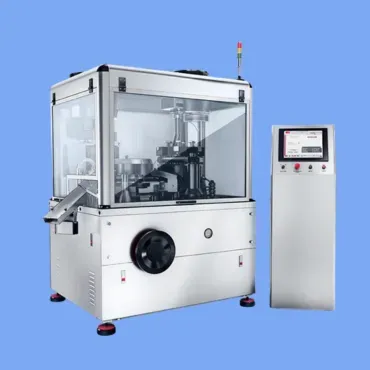
The packaging machines for pharmaceutical applications are automated systems designed to package pharmaceutical, nutraceutical, and healthcare products with high accuracy and consistency. They ensure product protection, precise packaging, and compliance with industry quality standards.
Modern packaging machines support multiple formats including bottles, blister packs, sachets, pouches, and cartons, enabling flexibility across tablets, capsules, powders, and liquids. Equipped with automated controls, precise dosing mechanisms, and integrated inspection features, they ensure consistent packaging quality with minimal product loss in GMP-compliant environments.
Key Features
- Supports multiple packaging formats
- High accuracy and consistency in packaging
- Automated operation with integrated controls
- Suitable for tablets, capsules, powders, and liquids
- Designed for GMP-compliant packaging operations
Frequently Asked Questions
Pharmaceutical packaging machines include blister packaging machines (thermoforming or cold-form foil), strip packaging machines, bottle filling and capping lines, carton erecting and closing machines (cartoners), leaflet insertion systems, labelling machines, tamper-evident banding equipment, and end-of-line serialisation systems—covering both primary and secondary packaging for all solid and liquid dosage forms.
A pharmaceutical blister packaging machine thermoforms or cold-forms cavities in PVC, PVDC, or aluminium foil, places tablets or capsules into the cavities, seals a lidding foil, and punches individual blister cards. Blister packs protect drug products from moisture, light, and oxygen, improving shelf life and enabling unit-dose patient compliance packaging.
Thermoform blister packaging heats and moulds transparent PVC or PVDC film into cavities—cost-effective, high-speed, and visible to patients. Cold-form (Alu-Alu) blistering mechanically presses aluminium foil into cavities without heat, providing superior moisture and oxygen barrier protection for highly moisture-sensitive APIs that require extended shelf life under tropical storage conditions.
A pharmaceutical cartoning machine erects flat carton blanks into open cartons, inserts blister packs, bottles, or other primary packs along with package inserts or leaflets, closes and tucks or glues the carton ends, and discharges finished cartons. Integrated vision systems verify leaflet presence, correct product insertion, and print quality before carton closure.
Serialisation assigns a unique serial number to each pharmaceutical pack, printed as a 2D DataMatrix barcode, enabling track-and-trace across the supply chain. It is mandated by the EU Falsified Medicines Directive (FMD), US Drug Supply Chain Security Act (DSCSA), and other global regulations to authenticate drug products and prevent counterfeiting and diversion.
Yes. GMP packaging machines feature 21 CFR Part 11-compliant control systems, electronic batch records, audit trails, and vision systems for 100% pack inspection. They meet FDA 21 CFR Part 211, EU GMP Annex 15, and ICH Q10 requirements, with full IQ/OQ/PQ qualification support and change control documentation for GMP regulatory inspections.
Pharmaceutical labelling machines apply pre-printed or on-demand printed labels with batch number, expiry date, serial number, and regulatory text, verified by integrated vision systems checking label placement, print quality, and barcode readability. Label reconciliation systems track label usage and destruction, meeting GMP labelling control requirements under FDA 21 CFR Part 211.122.
Modern pharmaceutical packaging lines integrate multiple 100% automated inspection systems: camera-based vision systems for tablet/capsule count and blister cavity fill verification, metal detectors, checkweighers for pack weight verification, barcode and 2D DataMatrix readers for serialisation verification, and seal integrity testers—ensuring every pack meets quality specifications before release.
Yes, all our products are designed and sourced to meet international regulatory standards, including GMP, USFDA, EU-GMP, WHO, and other relevant compliance requirements.
Absolutely. Our solutions are engineered for seamless integration with existing systems, ensuring minimal disruption and optimal performance within your current setup.
Yes, our team offers technical consultation to help you choose the most suitable product based on your process requirements, facility design, and compliance needs.
Yes, all our products are aligned with our turnkey execution approach, ensuring compatibility with overall facility design, engineering, and operational requirements.
Yes, we provide customised solutions tailored to your process, capacity, and regulatory requirements to ensure optimal performance and efficiency.
Our products are used across pharmaceutical manufacturing, biotechnology, nutraceuticals, research laboratories, and regulated healthcare environments.
We follow strict quality standards and work with trusted technologies and manufacturing processes to ensure consistent performance, durability, and compliance.
Yes, we offer ongoing technical support to ensure smooth operation, performance optimisation, and long-term reliability of all supplied systems and components.