
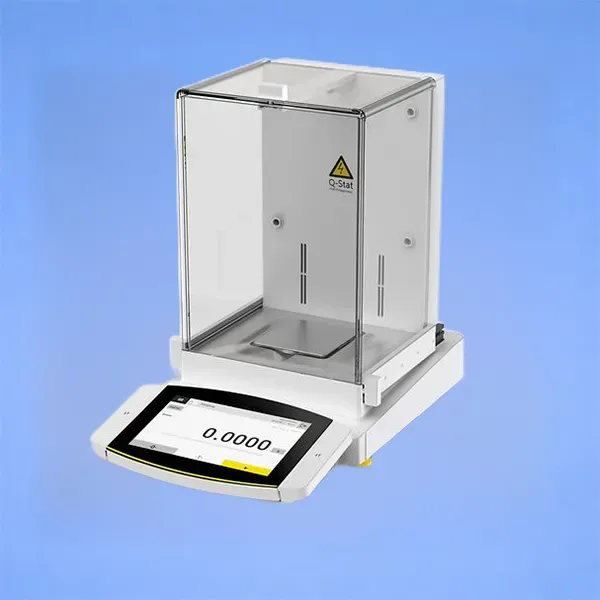
Lab Weighing
Pharmaco Global offers advanced laboratory weighing solutions designed to deliver high precision, reliability, and GMP compliance for pharmaceutical, biotechnology, research, and quality control environments. Accurate weighing is a critical step in regulated laboratory workflows, supporting processes such as sample preparation, formulation development, analytical testing, and quality assurance under WHO GMP, USFDA, and EU GMP standards.
Our weighing systems are engineered with state-of-the-art sensor technology and intelligent control systems, enabling highly accurate and reproducible measurements across a wide range of pharmaceutical laboratory and industrial applications. Designed to meet IQ/OQ/PQ validation requirements, these systems integrate seamlessly into GMP laboratory workflows while ensuring operational efficiency, audit-trail documentation, and full regulatory compliance.


Frequently Asked Questions
Pharmaceutical labs use microbalances (readability 0.001 mg), analytical balances (0.1 mg), semi-microbalances (0.01 mg), and precision balances (0.01 g). Selection depends on sample weight and required accuracy — all must meet USP <41> minimum weight requirements for the quantities actually weighed in routine operations.
USP <41> Balances defines pharmaceutical weighing requirements. It mandates that every balance has a validated minimum weight — the smallest sample weighable with ≤0.10% measurement uncertainty. This ensures dosage accuracy when weighing APIs, reference standards, and excipients, and is verified during balance qualification and periodic calibration.
Minimum weight is the smallest sample a specific balance can weigh with ≤0.10% combined measurement uncertainty. It is determined individually per instrument, factoring in the balance's repeatability under actual environmental conditions and representative tare vessels — not a fixed number specified by the manufacturer alone.
Daily calibration with certified external weights is required before use. Full service calibration with measurement uncertainty documentation is performed at least annually, or per a documented risk-based schedule. From 2026, calibration certificates must include uncertainty values and a conformity decision rule — not just a pass/fail statement.
Required GMP records include IQ/OQ/PQ qualification protocols and reports, calibration certificates traceable to national standards (NIST/NPL), daily calibration logs, minimum weight determination studies, preventive maintenance records, and equipment logbooks — all retained and available for FDA and EU GMP regulatory inspection.
Vibration, air drafts, temperature fluctuations, and humidity all degrade balance accuracy. Balances must be placed on anti-vibration benches, away from HVAC vents, in temperature-controlled rooms (18–22°C). These conditions must be assessed during the minimum weight study and documented in the IQ/OQ qualification reports.
An analytical balance reads to 0.1 mg — standard for most pharmaceutical QC weighing. A microbalance reads to 0.001 mg (1 µg), required for potent APIs, reference standards, or trace-level samples where analytical balance precision is insufficient to meet USP <41> minimum weight acceptance criteria.
Large or tall tare vessels raise a balance's effective minimum weight because their mass and geometry affect repeatability. GMP auditors regularly challenge minimum weight studies performed without representative tare vessels. Studies must always be conducted using the actual containers used in production or testing workflows.
Yes, all our products are designed and sourced to meet international regulatory standards, including GMP, USFDA, EU-GMP, WHO, and other relevant compliance requirements.
Absolutely. Our solutions are engineered for seamless integration with existing systems, ensuring minimal disruption and optimal performance within your current setup.
Yes, our team offers technical consultation to help you choose the most suitable product based on your process requirements, facility design, and compliance needs.
Yes, all our products are aligned with our turnkey execution approach, ensuring compatibility with overall facility design, engineering, and operational requirements.
Yes, we provide customised solutions tailored to your process, capacity, and regulatory requirements to ensure optimal performance and efficiency.
Our products are used across pharmaceutical manufacturing, biotechnology, nutraceuticals, research laboratories, and regulated healthcare environments.
We follow strict quality standards and work with trusted technologies and manufacturing processes to ensure consistent performance, durability, and compliance.
Yes, we offer ongoing technical support to ensure smooth operation, performance optimisation, and long-term reliability of all supplied systems and components.