
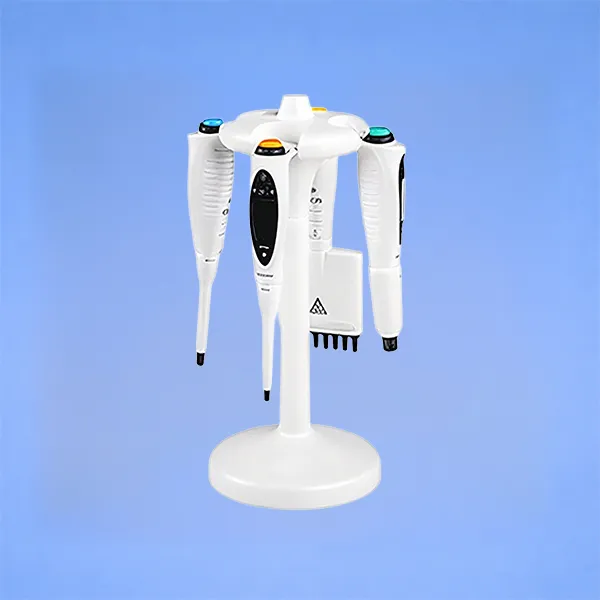
Pipettes
Pipettes are handheld or electronic laboratory instruments used to measure and transfer precise volumes of liquid in pharmaceutical, biotechnology, and life science environments. That precision is non-negotiable — whether dispensing a reagent, preparing a QC sample, or running a high-throughput analytical assay, the accuracy of every transfer directly affects results, method validation outcomes, and GMP compliance.
Pharmaco Global’s pipette range covers manual, electronic, and multichannel formats, built for researchers and laboratory technicians who need consistent, audit-ready performance across every use in regulated environments.
Single-channel pipettes handle everyday liquid transfers with straightforward volume adjustment and a lightweight grip that reduces hand fatigue over long working sessions. Multichannel options — available in 8- and 12-channel configurations — are built for plate-based workflows where speed, repeatability, and sample throughput matter most. For pharmaceutical laboratories that need to eliminate operator variability and meet GMP documentation requirements, electronic pipettes offer programmable dispensing modes that standardise volume delivery across users, shifts, and validated analytical methods.

Frequently Asked Questions
Pharmaceutical labs use air-displacement micropipettes (single-channel and multichannel), positive-displacement pipettes for viscous or volatile samples, electronic pipettes for high-throughput reproducibility, and repeat-dispense pipettes for multiple equal aliquots. Single-channel models cover 0.1 µL to 10 mL; multichannel pipettes serve 8, 12, or 96 simultaneous channels.
Air-displacement pipettes use an air cushion between the piston and liquid — suitable for most aqueous pharmaceutical samples. Positive-displacement pipettes have a capillary piston that directly contacts the liquid — eliminating air gaps and inaccuracies when pipetting viscous, dense, volatile, or radioactive pharmaceutical samples where standard air-displacement causes volume errors.
High-use pharmaceutical pipettes require calibration every 3–6 months; moderate-use instruments every 6–12 months. GMP manufacturing support applications typically mandate quarterly calibration. All calibration must be performed gravimetrically per ISO 8655 with traceable uncertainty values documented, and records retained for regulatory inspection per 21 CFR Part 211.
ISO 8655 is the international standard defining performance requirements, calibration methods, and maximum permitted errors for micropipettes and piston-operated volumetric instruments. GMP pharmaceutical laboratories must calibrate pipettes to ISO 8655 to ensure measurement traceability, demonstrate compliance during regulatory audits, and support data integrity requirements.
Multichannel pipettes simultaneously aspirate and dispense from 8, 12, or 96 channels aligned with standard microplate formats. They are used in pharmaceutical labs for ELISA, cell viability assays, dissolution sample preparation, high-throughput screening, and bioassay workflows — significantly increasing throughput and reducing operator variability versus single-channel pipetting.
Required GMP documentation includes calibration certificates (ISO 8655-compliant, with accuracy and precision data traceable to national standards), calibration frequency justification, maintenance and repair logs, user training records, and equipment logbooks. All records must be retained and available for FDA 21 CFR Part 211 and EU GMP Chapter 6 regulatory inspection.
Manual pipettes require thumb pressure for aspiration — operator-dependent, variable across users, and cause repetitive strain injury at high volumes. Electronic pipettes use a motor-driven mechanism with programmable speed and volume settings, reducing technique-dependent variability, improving cross-operator reproducibility, and enabling aspiration-mix-dispense sequences critical in pharmaceutical bioassays.
Store pipettes vertically in a stand — never flat with tips attached. Clean externally with 70% IPA. Autoclave only if the manufacturer specifies the model is autoclavable. Inspect O-rings and seals regularly. Return immediately for recalibration or repair if dropped, exposed to corrosive liquids, or delivering inconsistent volumes.
Yes, all our products are designed and sourced to meet international regulatory standards, including GMP, USFDA, EU-GMP, WHO, and other relevant compliance requirements.
Absolutely. Our solutions are engineered for seamless integration with existing systems, ensuring minimal disruption and optimal performance within your current setup.
Yes, our team offers technical consultation to help you choose the most suitable product based on your process requirements, facility design, and compliance needs.
Yes, all our products are aligned with our turnkey execution approach, ensuring compatibility with overall facility design, engineering, and operational requirements.
Yes, we provide customised solutions tailored to your process, capacity, and regulatory requirements to ensure optimal performance and efficiency.
Our products are used across pharmaceutical manufacturing, biotechnology, nutraceuticals, research laboratories, and regulated healthcare environments.
We follow strict quality standards and work with trusted technologies and manufacturing processes to ensure consistent performance, durability, and compliance.
Yes, we offer ongoing technical support to ensure smooth operation, performance optimisation, and long-term reliability of all supplied systems and components.